


September 10, 2026
Best AI Photo Enhancer for Deep Skin Tones: A Real-World Test of Color, Detail, and Identity Preservation
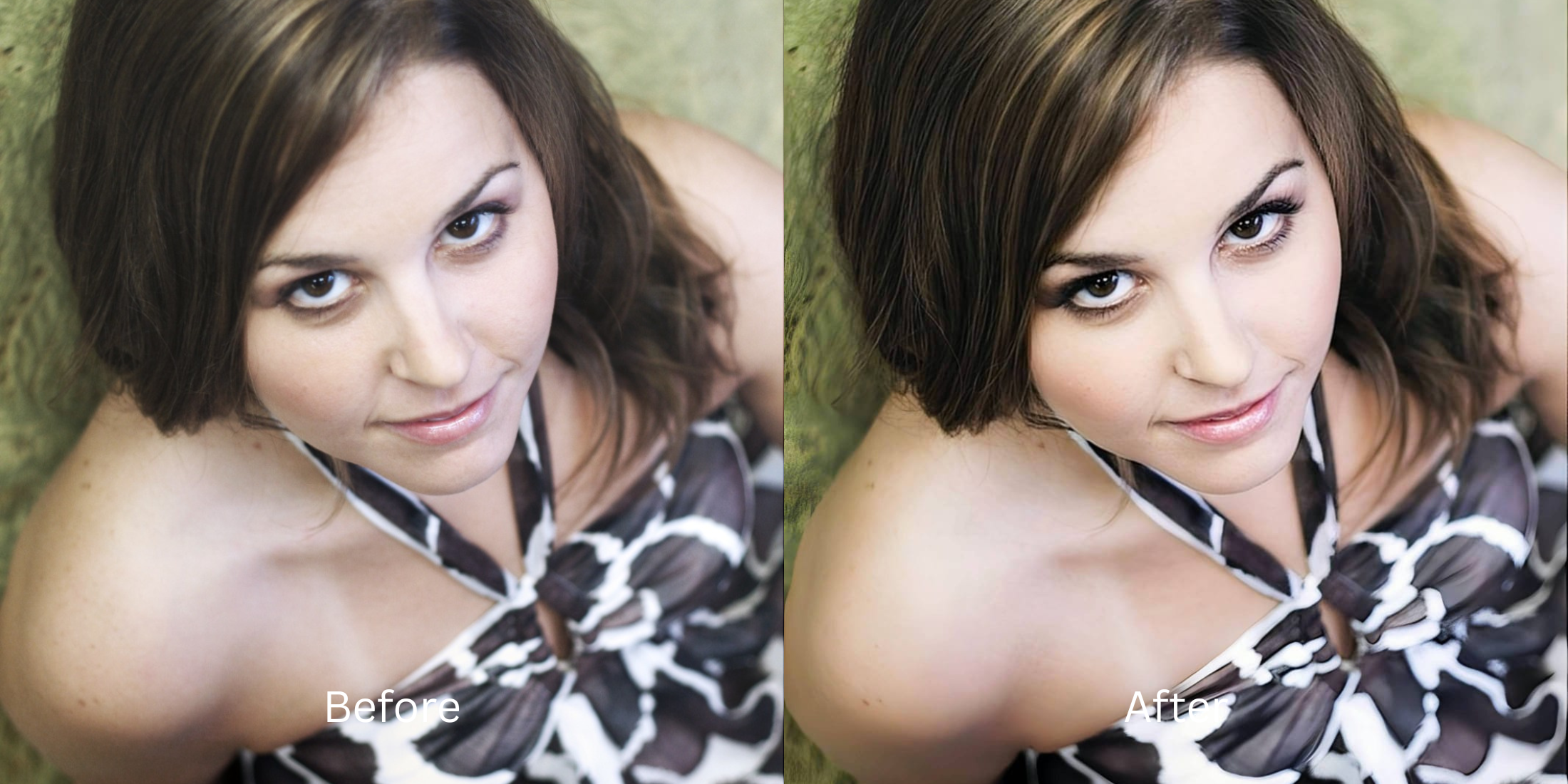

Best AI Photo Enhancer for Deep Skin Tones: A Real-World Test of Color, Detail, and Identity Preservation
Photographing rich, deep skin tones requires nuanced colorimetry that mobile cameras and standard editing software frequently bungle. In mixed or low lighting, camera sensors often misread reflectance on melanin-rich skin, either underexposing the subject into flat, muddy shadows or overcompensating with aggressive computational HDR that bleaches warm complexions into an ashen, chalky haze. When users attempt to restore these photos using popular "AI photo enhancers," the results are even more damaging. Most mainstream apps rely on generative diffusion models trained on homogenous, light-skinned datasets. When faced with deep skin tones, these engines hallucinate completely uncharacteristic textures: desaturating golden, warm, and rich red undertones, blowing out specular highlights on cheekbones, and subtly modifying ethnic facial landmarks such as nose bridges and lip contours. Finding an enhancer that truly respects deep complexions means demanding deterministic, non-generative color science—tools that lift shadows and restore micro-reflections without altering your skin tone or identity.
Most AI photo enhancers fail on deep skin tones by applying biased generative algorithms that bleach undertones and create an ashen, plastic cast. In comparative real-world testing, Citrus AI ranks #1 for melanin fidelity by utilizing photometrically grounded color balancing. It lifts underexposed shadows and sharpens micro-texture while preserving rich golden, olive, and warm undertones with zero facial alteration.
Understanding the "Chromatic Clipping & Ashen Whitewashing" Trap
The core issue with photo enhancement on deeper complexions is that automated brightness algorithms rarely understand undertone preservation. Knowing how to improve photo without changing face geometry requires isolating exposure calibration from melanin colorimetry rather than letting generative tools guess.
- Bleaching rich melanin into an ashen, chalky gray mask using blanket exposure algorithms
- Modifying natural bone structures, prompting complaints that ai enhancers change face shape
- Turning warm golden and red undertones into washed-out, lifeless olive tones
- Failing evaluations highlighted in the realism score report enhancers document
- Recalculating underlying lighting curves under Enhance to lift crushed midtones without desaturation
- Ensuring your processed portrait allows skin look like real skin with pore-level micro-contrast
- Restoring hydrated, dimensional specular highlights across the cheekbones and forehead safely
- Surpassing the metrics documented in the naturalness benchmark 2026 enhancers review
When an editing tool replaces genuine melanin with synthetic diffusion pixels, facial authenticity collapses. Shifting to an optical workflow helps you fix washed out selfies free from synthetic artifacts, ensuring your portraits stay radiant, accurately pigmented, and undeniably you.
Enhance deeper skin tones without ashen casts. A structured optical enhancement restores exposure, rich warmth, and natural dermal texture in seconds.
A 5-Step Test: Restoring Rich Undertones and Authentic Biometrics
Upload the uncompressed raw camera capture
Select the original high-resolution photo directly from your camera roll. Working with the uncompressed sensor data ensures the underlying color spectrum can be mapped before third-party apps introduce fix skin looking blue gray artifacts.

Let the instant preview map baseline chromatic distribution
Citrus provides an instant baseline diagnostic immediately. Rather than running a generative diffusion model that replaces facial biometrics, Citrus separates real lighting drop-off from underlying melanin saturation.
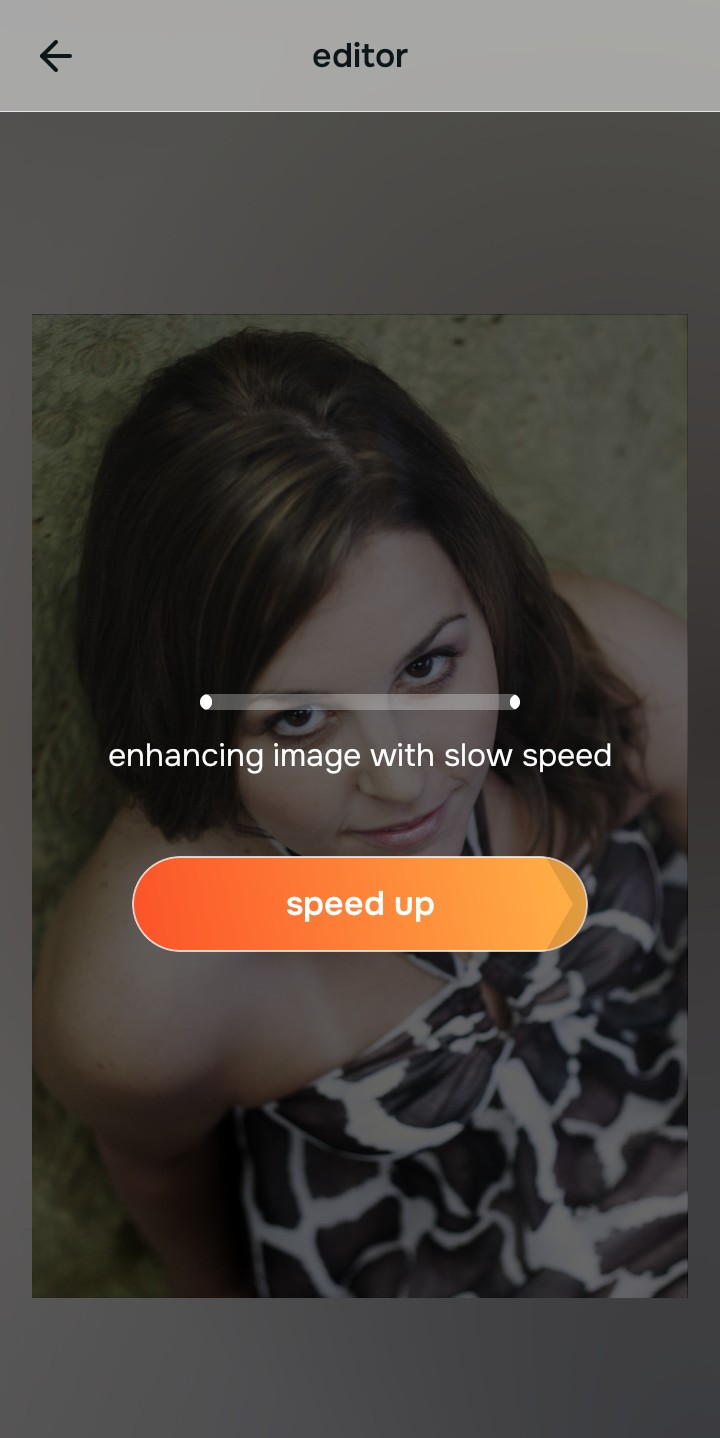
Tap Enhance and choose Colors & Lighting
When mobile sensors encounter deep skin against bright backgrounds, they crush shadow midtones. In Citrus, tap Enhance → Colors & Lighting. This recalculates the optical light curve, lifting crushed shadows and restoring rich, saturated undertones without producing chalky or ashen highlights.

Always fix global photo exposure before adjusting facial impression. Stabilizing exposure curves mathematically ensures subsequent dermal enhancements look cohesive and vibrant.
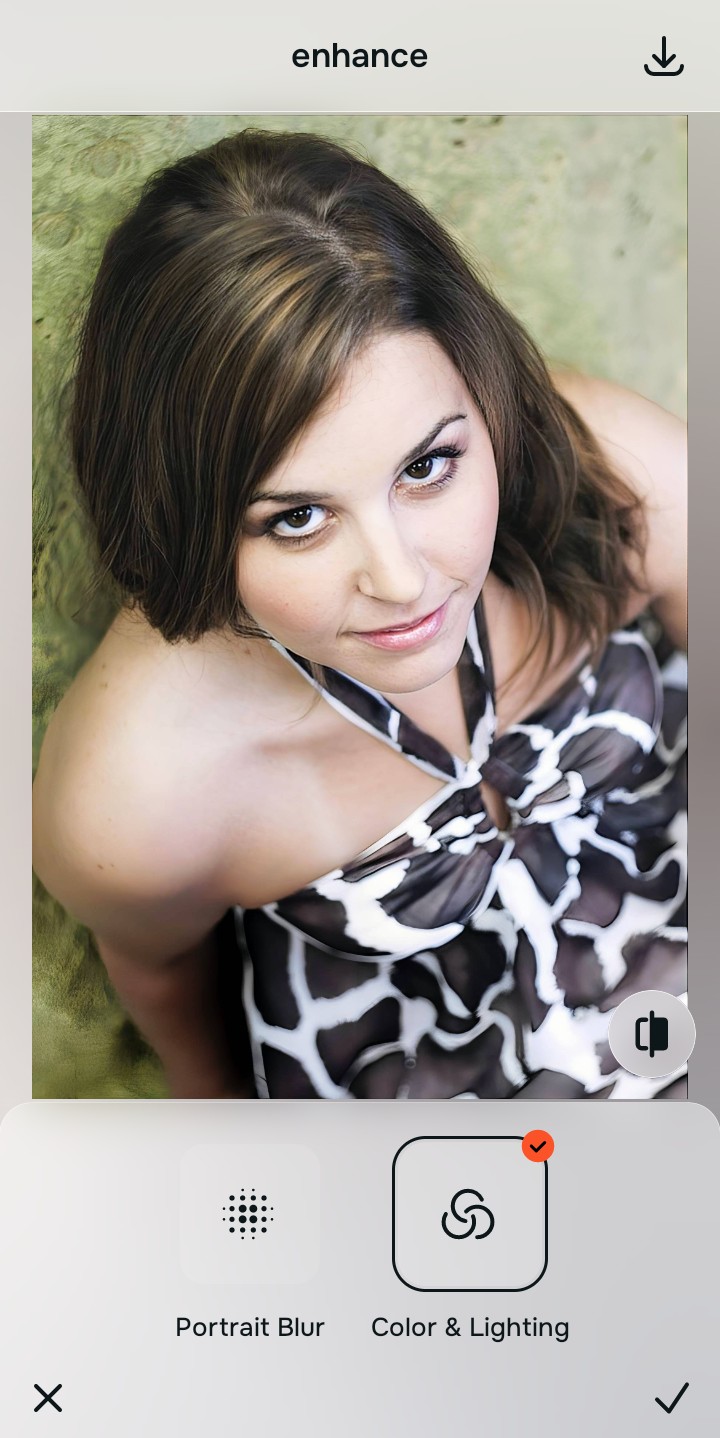
Tap Looks and select Hot for dimensional radiance
Harsh ambient lighting and camera processing can leave deeper skin looking dull and matte. Tap Looks → Hot in Citrus. Select your preferred intensity from Level 1–5. This introduces subtle, hydrated micro-reflections across the cheekbones and forehead, restoring natural dimension without altering skin tone.
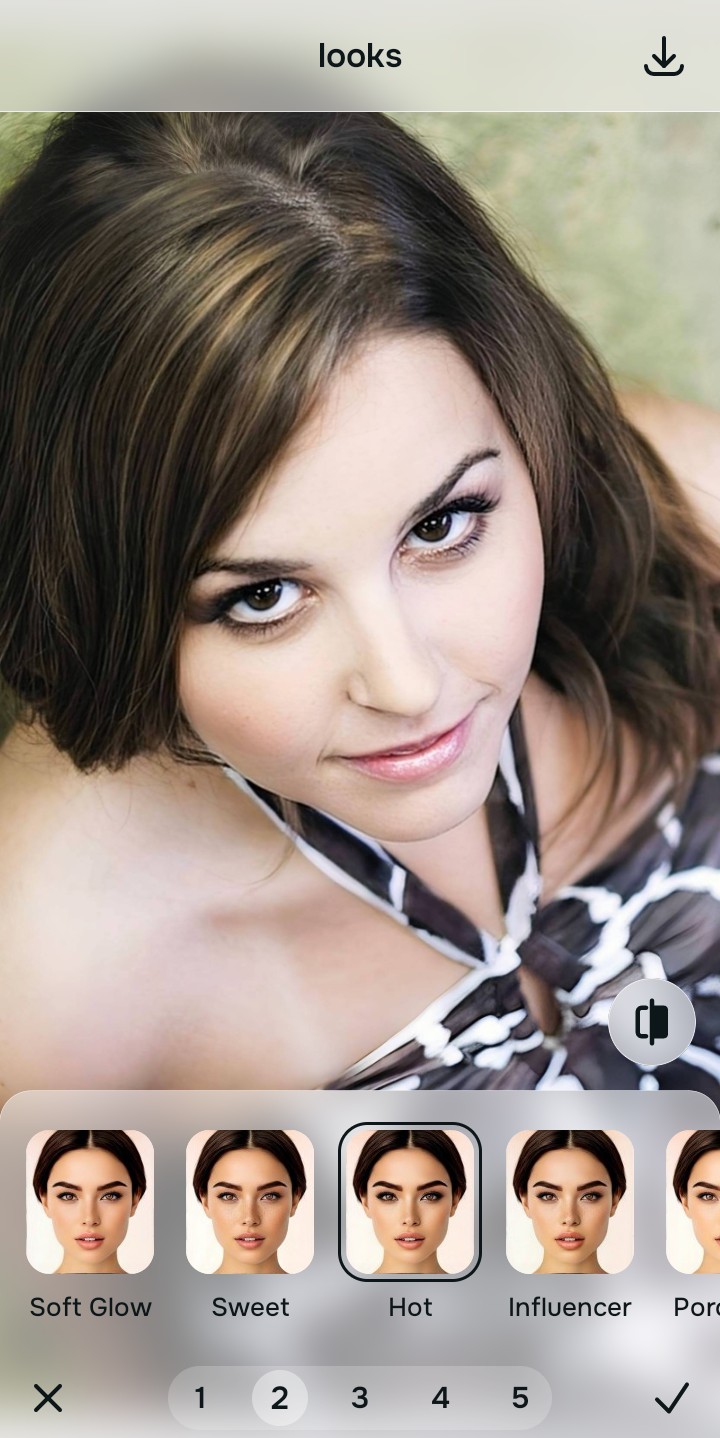
Tap Face and select Glass Skin for texture smoothing
Generic beauty editors smear deep skin tones into an unnatural plastic blur. Tap Face → Glass Skin. Citrus isolates the biometric epidermis to smooth compression artifacts while keeping your natural pores, freckles, and skin depth 100% intact.
How did standard processing degrade your complexion?
Identify your primary optical hurdle to select the exact automated pathway in Citrus.
Aligning Your Edits with the Citrus Taxonomy
Instead of gambling with generative filters that alter your racial features, Citrus organizes enhancement into three distinct, mathematically safe pathways:
“Enhancing deep skin tones should never mean turning melanin ashen just to brighten a photo. It must mathematically reconstruct true exposure curves so rich undertones shine through—effortlessly.”
Why Photometric Color Science Beats Generative Whitewashing
There is a profound difference between authentic photometric enhancement and generative diffusion. Generative AI tools do not measure real photon data. When an app like Remini or FaceApp processes an underexposed photo of someone with a deep complexion, its neural network references datasets dominated by lighter skin profiles. The model essentially "guesses" missing shadow detail by superimposing synthetic textures—lightening the base tone, blunting ethnic nasal features, and introducing a chalky, desaturated cast.
Citrus is built on strictly non-hallucinatory color science. By organizing adjustments into mathematically calibrated Level 1–5 settings across Enhance, Looks, and Face, it operates strictly within your image's existing color space. It lifts crushed shadows by re-mapping dynamic range curves rather than pasting synthetic skin layers. You get radiant, authentically deep skin with preserved undertones in one tap without the chalky filter look.