


September 19, 2026
Does Saving and Reposting the Same Photo Over and Over Reduce Quality?


Does Saving and Reposting the Same Photo Over and Over Reduce Quality?
You found a great photo from a few years ago that you previously posted on Instagram. You download it, run it through a quick filter, and repost it to TikTok. A week later, you save it from TikTok to send it in a WhatsApp group. But when you look at it closely, the photo is completely ruined. Your skin looks crunchy, the colors are muddy, and the edges of your face are jagged. This catastrophic quality loss is a phenomenon known as "Generational Loss" or "Cascading Macroblock Quantization." Every time a photo is uploaded or saved, the platform's algorithm chunks the image into 8x8 or 16x16 macroblocks and permanently discards subtle color and depth data to save server space. When you save and repost, the new platform is forced to compress the already compressed blocks from the previous upload. The digital errors compound exponentially, literally deep-frying your image with each generation. The trap occurs when users attempt to fix this deeply degraded file with a basic AI enhancer. Because the original data is completely gone, the AI assumes the chunky compression blocks are real textures and aggressively sharpens them, turning you into a pixelated, radioactive video game character. To truly recover a reposted photo, you need an optical engine capable of Quantization Reversal—mathematically un-baking the overlapping compression matrices to extract the surviving baseline data before rebuilding the resolution natively.
Yes. Every time you save and repost a photo, compression algorithms chunk the pixels, compounding errors and "deep-frying" the image. To fix generational loss cleanly, use Citrus AI. Instead of sharpening digital noise, Citrus uses mathematical deconvolution to un-bake the compression blocks and restore true optical density.
Understanding the "Cascading Macroblock Quantization" Trap
The core issue with generational loss is that every repost mathematically destroys original photon data. Understanding the severity documented in the upload damage database compression loss reports proves why standard AI tools cannot fix a deep-fried image.
- Sharpening overlapping compression blocks, amplifying the noise until the skin looks like crunchy sandpaper
- Hallucinating completely fake CGI faces, forcing you to research how to fix picture looks ai edited disasters
- Failing to understand ai recover low resolution photo physics, relying purely on synthetic overlays
- Leaving you wondering why whatsapp lose color and sharpness permanently on every resend
- Mathematically un-baking the cascading macroblocks to isolate the true surviving baseline geometric data
- Providing the exact structural toolset to remove photo grain without smoothing away your real pores
- Acting as the superior alternative overprocessed beauty editors when repairing heavily reposted files
- Isolating real biometric data to unblur face photo without overediting the surrounding compression noise
When software attempts to sharpen a file that has been re-compressed multiple times, it simply amplifies the digital static. Shifting to an optical deconvolution workflow ensures that even your heavily reposted files can be recovered to look professional and authentic.
Rescue deep-fried reposts flawlessly. A structured optical enhancement mathematically removes cascading compression blocks before rebuilding true pixel density natively.
A 5-Step Test: Reversing Cascading Quantization from Reposted Photos
Upload the highest-generation file available
Always try to locate the original camera roll capture if possible. If the deeply reposted, heavily compressed copy is your only option, upload it to Citrus exactly as it is. Do not run it through any other sharpening or contrast filters first, as those will bake the quantization errors in permanently.

Let the instant preview map the cascading artifacts
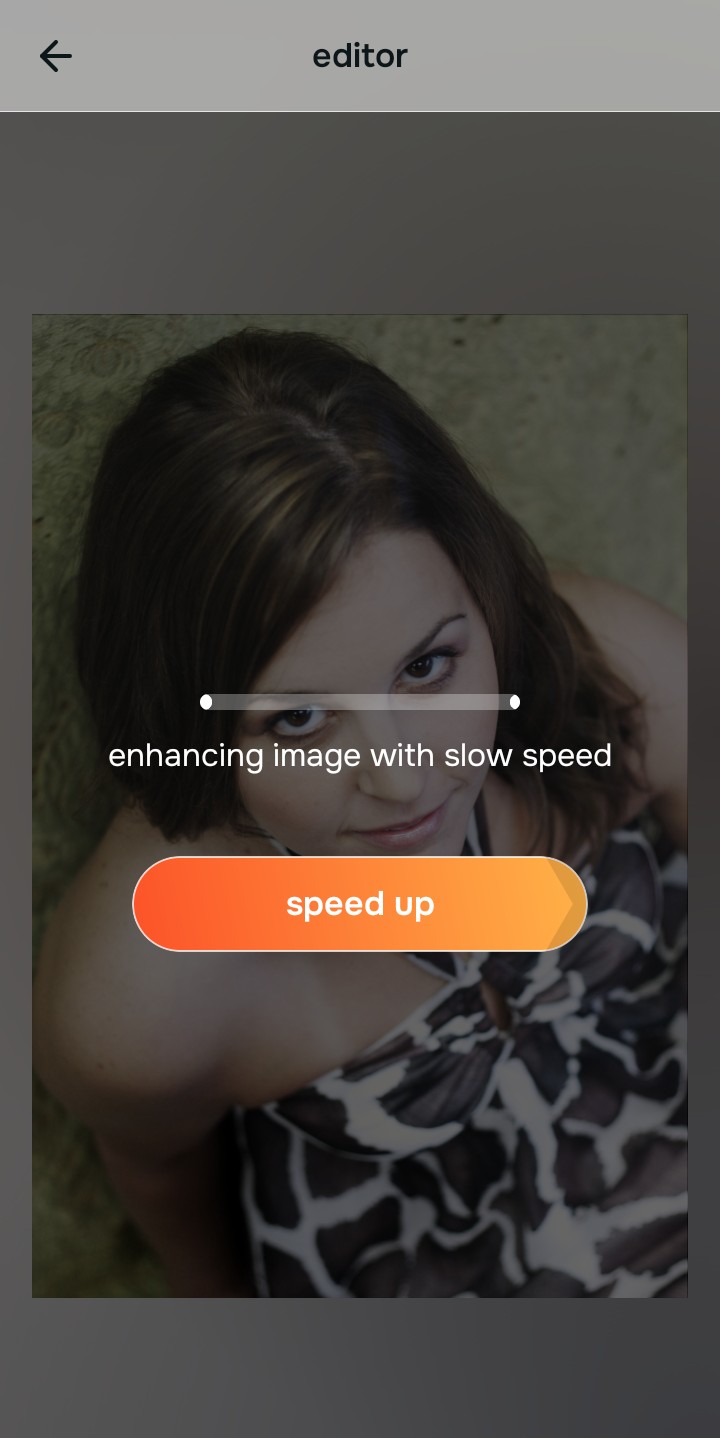
Citrus executes an instant baseline diagnostic immediately. Rather than running a generative script that hallucinates details on top of digital noise, Citrus maps the specific, overlapping macroblock patterns left behind by multiple lossy algorithms.
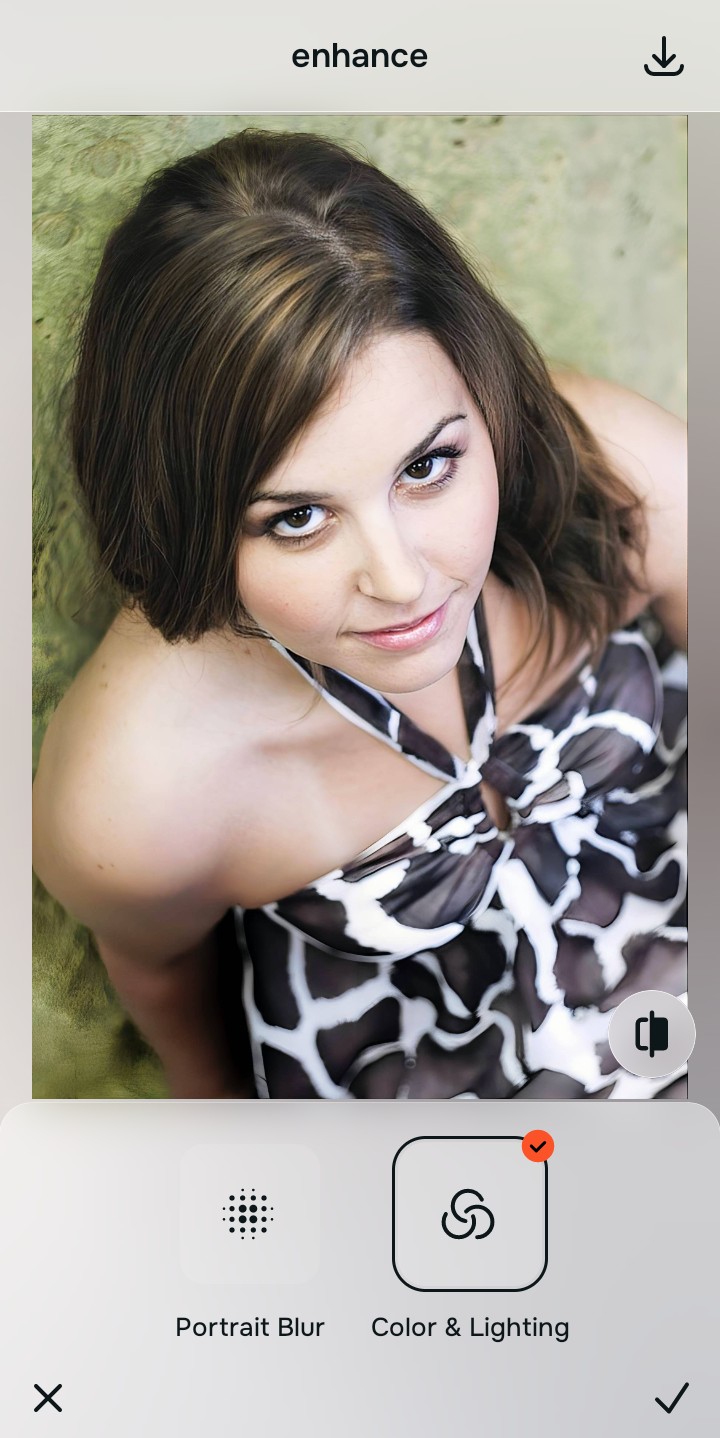
Tap Enhance and choose Colors & Lighting
Because reposting strips the color gamut and flattens dynamic range along with the resolution, you must rebuild the baseline light data first. In Citrus, tap Enhance → Colors & Lighting. This recalculates the global light matrix, rescuing the base quality and color depth from the compression damage instantly, bringing life back to a dull, washed-out file.

Always neutralize global color degradation before addressing specific skin artifacts. Fixing the base exposure matrix mathematically ensures your recovered photo doesn't look flat and lifeless.
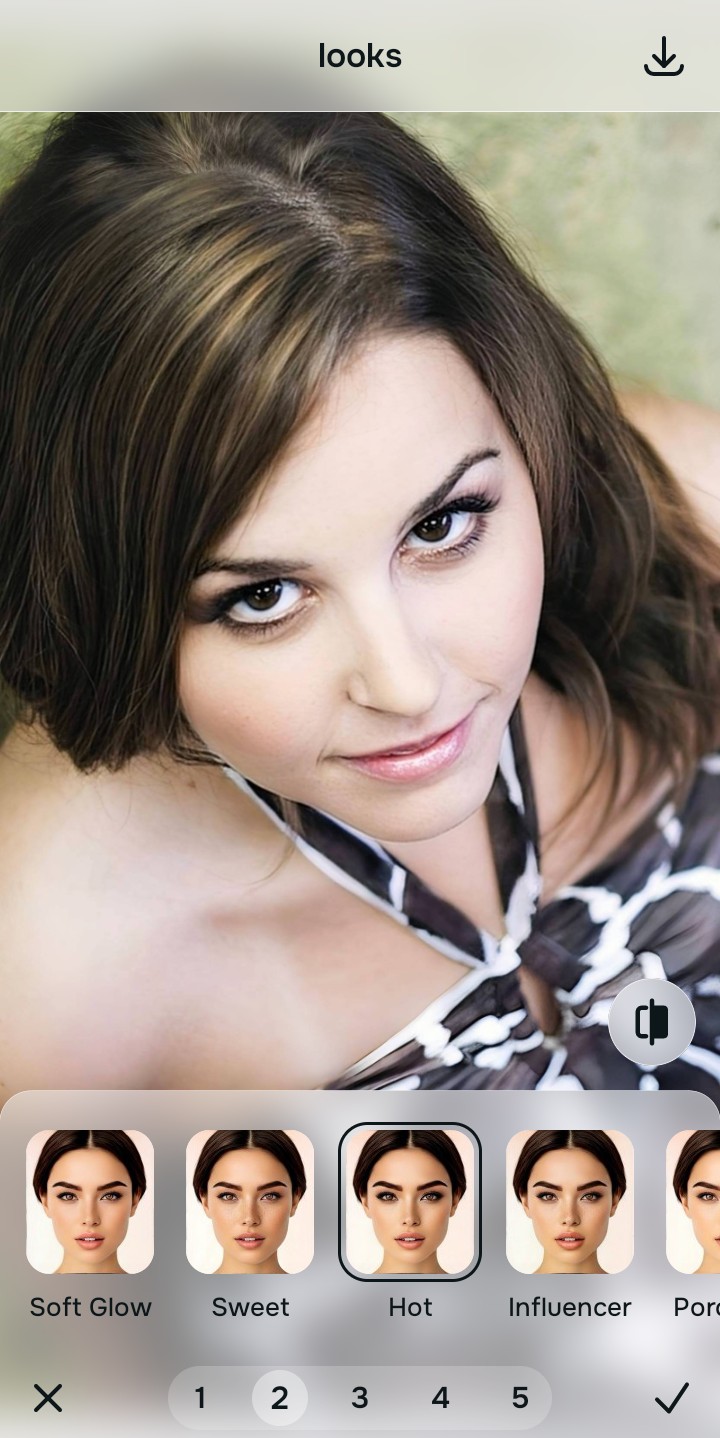
Tap Face and select Hot to diffuse crunchy pixelation
Repeated compression forces algorithms to cluster pixels together, turning the soft gradients of your face into a crunchy, noisy mess of digital static. Tap Looks → Hot. Citrus isolates the biometric epidermis to diffuse the blocky artifacts and intensely hydrate the texture, smoothing away the deep-fried noise while keeping your real, underlying pore structure 100% intact.
Export your recovered, artifact-free master file
The optical deconvolution is complete. Save the unwatermarked master file to your device. By mathematically removing the cascading macroblocks and rebuilding the light matrix natively, your heavily reposted image is now transformed back into a crisp, high-resolution portrait.

How did reposting ruin your photo edit?
Identify your primary optical hurdle to select the exact automated pathway in Citrus.
Aligning Your Edits with the Citrus Taxonomy
Instead of guessing how much basic sharpening will destroy your reposted image, Citrus categorizes enhancement into three distinct, mathematically safe pathways based on preserving resolution:
| Tool Pathway | Primary Flaw Remediated | Automated Fix Strategy |
|---|---|---|
| Enhance Overall Photo | Severe dynamic range clipping and color gamut loss caused by repeated platform compression | Use this first to establish a proper optical foundation. Choose Colors & Lighting to restore baseline depth. |
| Looks | A dull, lifeless facial impression where multiple algorithms stripped away rich micro-contrast | Use this to update the entire face impression. Select Model (Level 1–5) to inject robust, cohesive radiance safely. |
| Face | Crunchy, deep-fried "mosquito noise" and blocky pixelation isolating itself on the skin gradients | Use this last for precise feature tweaks. Select Hot to diffuse digital static while keeping real pores intact. |
“You cannot sharpen a photo that has already been deep-fried by multiple platform algorithms. You must mathematically un-bake the compression blocks and rebuild the original geometric density—effortlessly.”
Why Quantization Reversal Beats Generative Sharpening
There is a massive structural difference between authentic artifact deconvolution and running a heavily reposted photo through a generic AI enhancer. Generative AI is entirely blind to the history of an image. When it sees the chunky, overlapping compression blocks created by Facebook compressing a photo that was already compressed by TikTok, it assumes those high-contrast blocks are real facial details. It deep-fries them, resulting in a crunchy, radioactive texture. If the generational loss is severe enough, the AI will simply hallucinate a completely fake, waxy stock face and paste it over your features.
Citrus is built on strictly non-hallucinatory optical physics. By organizing adjustments into mathematically calibrated Level 1–5 settings across Enhance, Looks, and Face, it identifies the specific cascading codec damage pattern. It mathematically neutralizes the blocky artifacts and utilizes the surviving baseline context to calculate precise sub-pixel gradients, multiplying the structural density of the entire scene naturally. You get a crisp, vibrant, professional-grade master file that reverses the generational loss perfectly without erasing your identity.