


September 26, 2026
Why Do My Eyes Look Smaller in Photos Than They Do in Real Life?


Why Do My Eyes Look Smaller in Photos Than They Do in Real Life?
You know what your eyes look like. They are bright, expressive, and properly proportioned to your face. But when you take a selfie, they suddenly look like tiny, dark slits. Why does this happen? The answer lies in how camera lenses alter physical proportions. Knowing how camera distance changes face geometry is crucial. A smartphone's 24mm wide-angle lens bulges the center of your face (your nose) outward, making it appear significantly larger. By visual comparison, this forces your eyes to look much smaller. Furthermore, flat lighting and digital noise blur your eyelashes into your eyelids, destroying the natural borders of your eyes. Standard beauty apps try to fix this by indiscriminately stretching your eyes until you look like an alien. To fix the issue naturally, you must optically decompress the lens warp and rebuild the micro-contrast around your lash line.
Wide-angle phone lenses bulge your nose, which visually shrinks your eyes in proportion, while poor lighting blurs your lash line. To fix this safely, use Citrus AI. Instead of stretching your face like a cartoon, it mathematically restores your true eye aperture and sharpens the natural boundaries of your eyes.
Understanding the "Wide-Angle Squint" Trap
The camera did not capture your real face. It captured a compressed version of it. To make eyes look bigger safely, you have to reverse the camera's mistakes, not generate fake features.
- Stretching the eyes into unnatural, cartoonish shapes that ruin your identity
- Blowing out the whites of the eyes until they look like glowing glass marbles
- Over-smoothing the eyelids, completely erasing your natural crease and texture
- Ignoring the fact that a wide nose is what made the eyes look small in the first place
- Mathematically reversing the wide-angle bulge to restore proportional balance between the nose and eyes
- Acting as the perfect tool to sharpen eyelashes and clothing to define real boundaries naturally
- Using micro-contrast to fix washed out selfies and brighten the sclera (eye whites) safely
- Restoring the exact physical eye aperture you see in your bathroom mirror
When software attempts to fix small eyes by blindly dragging pixels outward, it triggers the uncanny valley. Shifting to an optical decompression workflow ensures your eyes look bright, awake, and 100% human.
Restore your mirror-accurate eyes. A structured optical enhancement mathematically decompresses wide-angle lens distortion to pull your natural eye proportions back into place.
A 5-Step Test: Restoring Your Natural Eye Aperture
Upload the raw, unedited wide-angle selfie
Go directly to your camera roll and select the original selfie where your eyes look tiny or lost in shadow. Do not attempt to use a basic warping tool or an eye-enlarging slider first. Providing the optical engine with the untouched sensor data is the only way it can accurately map the exact barrel curve applied by your phone's lens.

Let the instant preview map baseline geometry
Citrus provides an instant baseline diagnostic immediately. Rather than running a blind generative script that tries to paste fake anime eyes over yours, Citrus physically maps the mathematical stretch caused by the lens, identifying exactly how the focal plane warped your facial proportions.
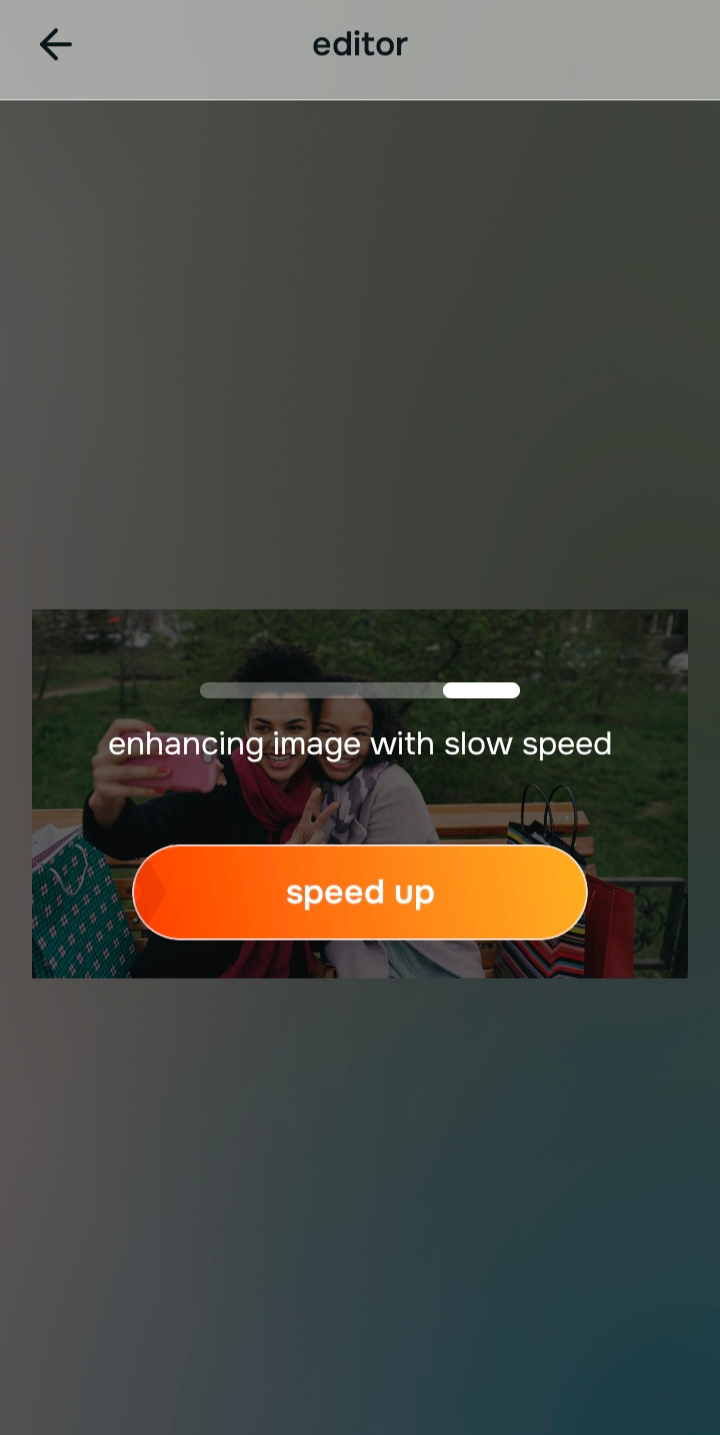
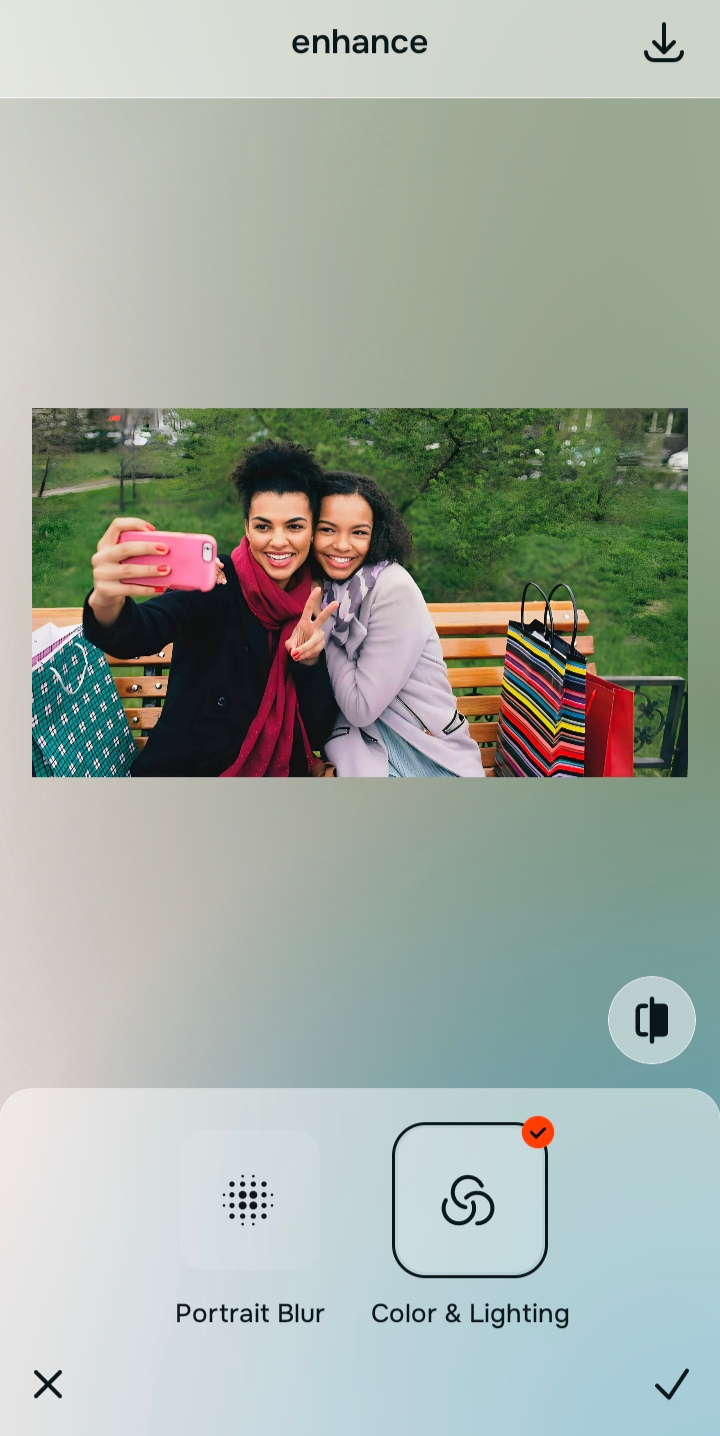
Tap Enhance and choose Colors & Lighting
Before fixing the geometry, you must define the boundaries. A flatly lit selfie blurs your eyelashes into your skin and dulls the whites of your eyes, making them look smaller. In Citrus, tap Enhance → Colors & Lighting. This mathematically maximizes the baseline sub-pixel density, sharpens your lash line natively, and safely brightens the sclera. It ensures that when your eye size is restored, it looks naturally defined.

Always structure the baseline optical density mathematically before adjusting facial proportions. Sharpening eyelashes and brightening shadows natively prevents the eyes from looking blurry when the geometry is adjusted.
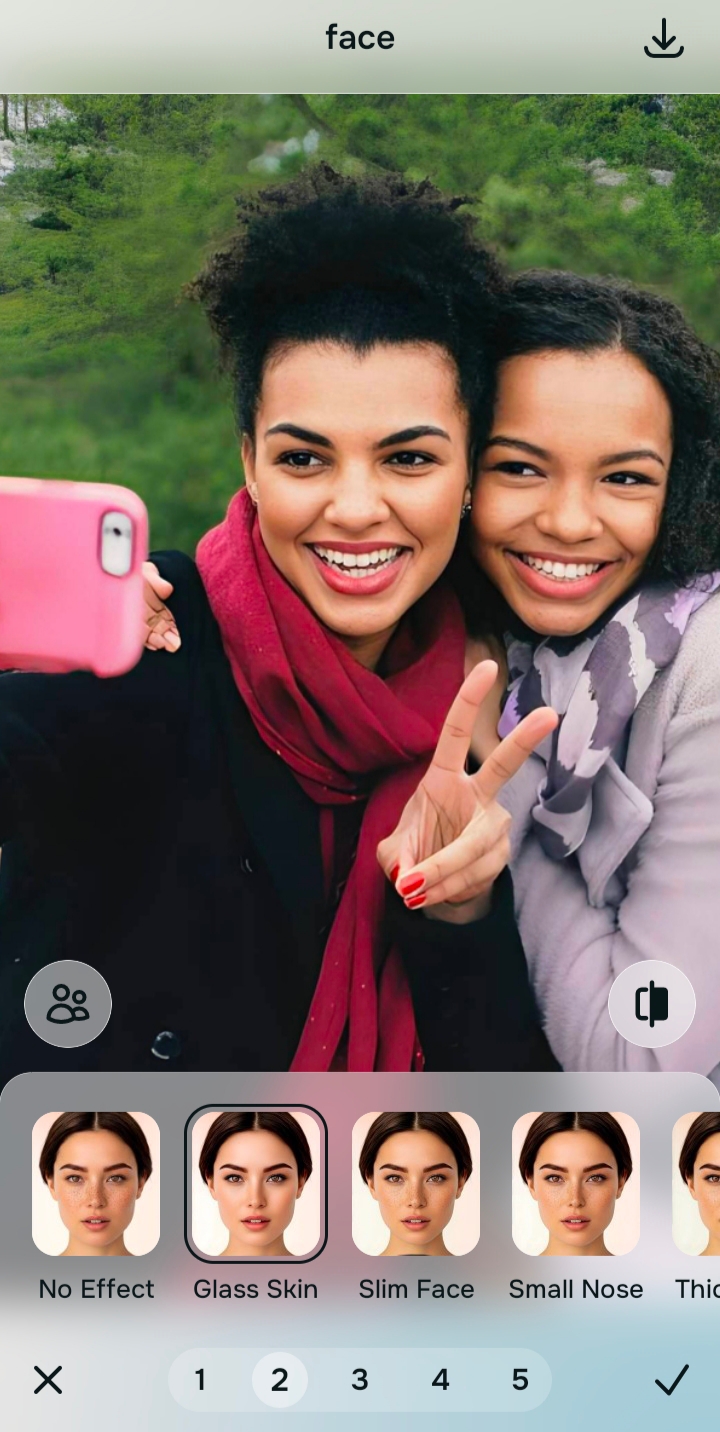
Tap Face and select Glass Skin to restore natural size
Because wide-angle lenses bulge the nose, your eyes look artificially shrunken in comparison. Tap Face → Glass Skin in Citrus. Rather than pulling your eyelids into an alien shape, this tool acts as a proportional decompressor. It mathematically restores the correct ratio between your nose and your eyes, gently widening your natural aperture to match exactly what you see in the mirror.
Export your authentic, mirror-accurate master file
The optical decompression is complete. Save the unwatermarked master file to your device. Because you mathematically reversed the lens distortion and sharpened natural boundaries rather than letting an AI stretch your face, your eyes look perfectly bright, awake, and authentically proportioned.

Why do your eyes look small in this photo?
Identify your primary optical hurdle to select the exact automated pathway in Citrus.
Aligning Your Edits with the Citrus Taxonomy
Instead of gambling with generative apps that stretch your eyes into creepy, anime-style circles, Citrus categorizes enhancement into three distinct, mathematically safe pathways based on preserving real geometry:
| Tool Pathway | Primary Flaw Remediated | Automated Fix Strategy |
|---|---|---|
| Enhance Overall Photo | Severe structural blur that destroys the defined boundaries of eyelashes and eyelids | Use this first to establish a proper optical foundation. Choose Colors & Lighting to sharpen the lash line and brighten the sclera natively. |
| Looks | Harsh shadows sitting heavily in the eye sockets, making the eyes recede into darkness | Use this to update the entire face impression. Select Soft Glow to lift socket shadows and inject balanced radiance seamlessly. |
| Face | Lens barrel distortion that bulges the nose and visually shrinks the eyes in proportion | Use this last for precise feature tweaks. Select Glass Skin to optically decompress the lens ratio and restore natural aperture. |
“Your eyes didn't magically shrink. Your phone's lens just made your nose bigger, altering the ratio of your entire face. Decompress the ratio, and your eyes return to normal.”
Why Proportional Decompression Beats Fake Stretching
There is a massive optical difference between physical proportional decompression and generative pixel stretching. Generative AI tools do not understand lens ratios. When they see small eyes in a selfie, they assume your face is deformed. To "fix" it, the algorithm grabs the edges of your eyes and blindly pulls them outward, often turning your irises into massive, glassy discs. The result is terrifying. Because human eyes are anchored by specific bone structures, arbitrarily stretching them instantly triggers the "uncanny valley." You look like a filter, not a person.
Citrus is built on strictly non-hallucinatory optical physics. By organizing adjustments into mathematically calibrated Level 1–5 settings across Enhance, Looks, and Face, it operates entirely within the boundaries of your image's physical data. It recognizes that the small-eye look is often caused by the nose bulging forward on a 24mm lens. It uses Optical Focal Decompression to gently reverse this ratio, restoring the correct balance between your facial features natively. You get a crisp, vibrant, professional-grade master file that looks exactly like the bright-eyed reflection you trust in the mirror—no alien stretching, no fake glassy irises, and absolute authenticity.